
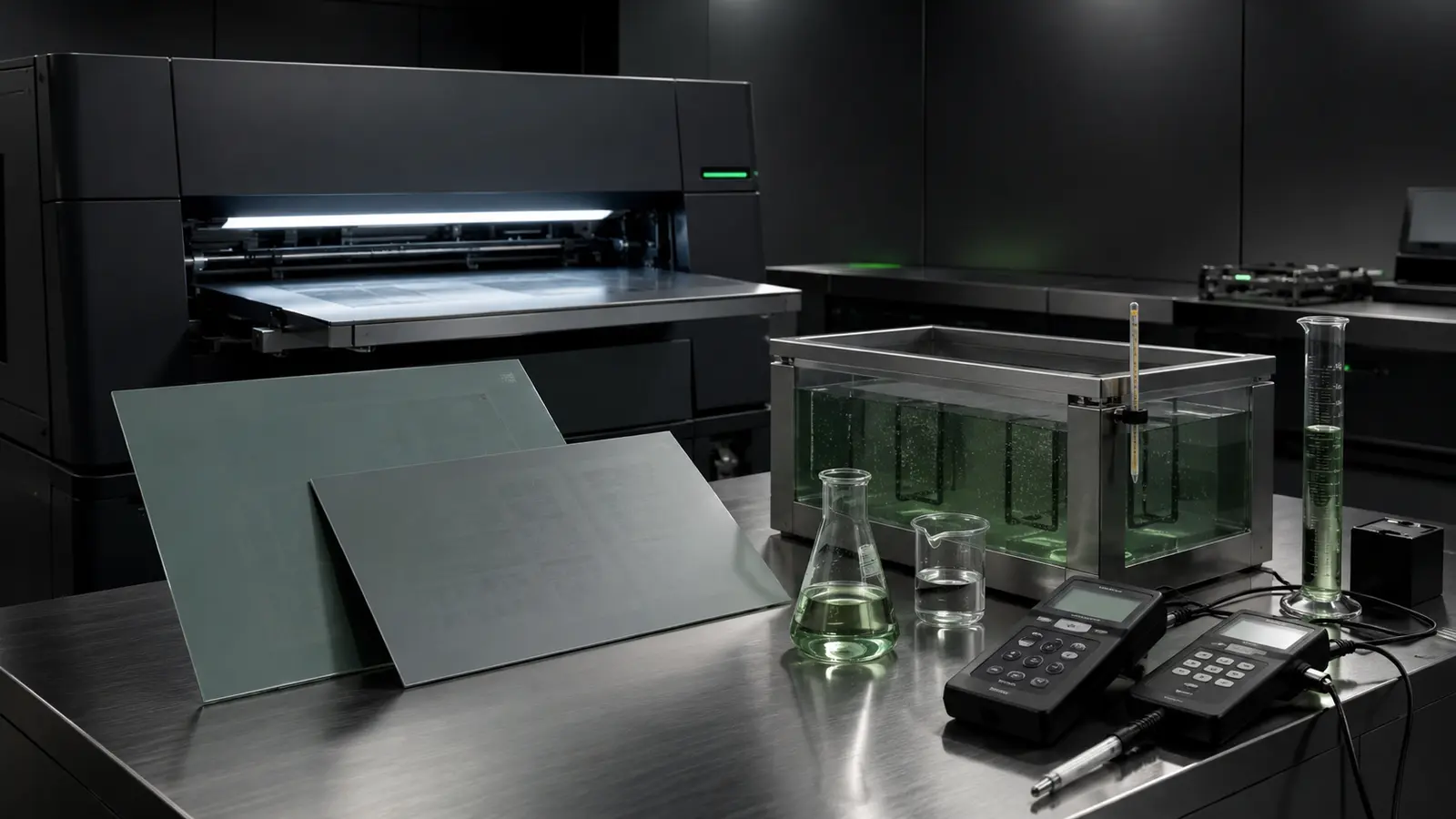
What plate-processing chemistry must support
Professional plate-processing chemistry should support CtP and CtCP workflows, stable processor operation, consistent prepress results, controlled cleaning and activation steps, and compatibility with the intended plate and process.
Why process stability matters
Small changes in prepress can become large problems on press. If plate preparation is unstable, the result may include production delays, additional make-ready time, inconsistent image areas or unnecessary waste.
Documentation is part of the product
In professional printing, SDS and TDS documentation helps confirm intended application, handling, compatibility, process conditions, storage and operational guidance. It is part of correct product selection, not optional background information.
How to introduce a product
A print shop should confirm plate type, processor condition, bath parameters, temperature, replenishment and documentation requirements before introducing or changing plate-processing chemistry.
Practical conclusion
Good plate-processing chemistry is about process control. The right product should fit the plate workflow, support stable processor operation and be backed by documentation that allows the customer to use it correctly and safely.
Related solutions
Explore the relevant product area and select a solution for your process.
View solutions →