Identify the ink, deposit and roll specification
Record the ink system, coating type, line count, cell volume, roll construction, age of contamination and cleaning history. This separates blocked cells from wear, damaged engraving, doctor-blade problems or incorrect press settings.
Clean before residue cures
Fresh residue is easier to remove than hardened deposits. Introduce routine cleaning after colour changes and at shift end, then reserve deep cleaning for confirmed blocked cells or repeated transfer problems.
Compare anilox cleaning methods
Chemical cleaning, ultrasonic cleaning, laser systems, dry-ice processes and soda-media blasting work in different ways. The permitted method depends on the roll manufacturer, engraving, coating condition and approved service procedure. A popular method is not automatically suitable for every anilox.
Select an anilox cleaner by ink chemistry
Water-based, solvent-based and UV inks leave different binders and pigments. Start with the least aggressive effective chemistry, verify the permitted pH and contact time, and use brushes or wipes intended for the roll surface.
Treat soda blasting as a specialist process
Sodium-bicarbonate media can be used by specialist systems, but particle grade, pressure, nozzle distance and roll protection must follow the equipment and roll supplier's instructions. This article does not replace an approved blasting procedure or trained service provider.
Control chemistry, contact time and rinsing
Do not allow cleaner to dry on the roll or exceed the documented contact time. Protect bearings, seals, sleeves and doctor-blade chambers, then remove chemical residue using the procedure specified for the selected system.
Measure the result after cleaning
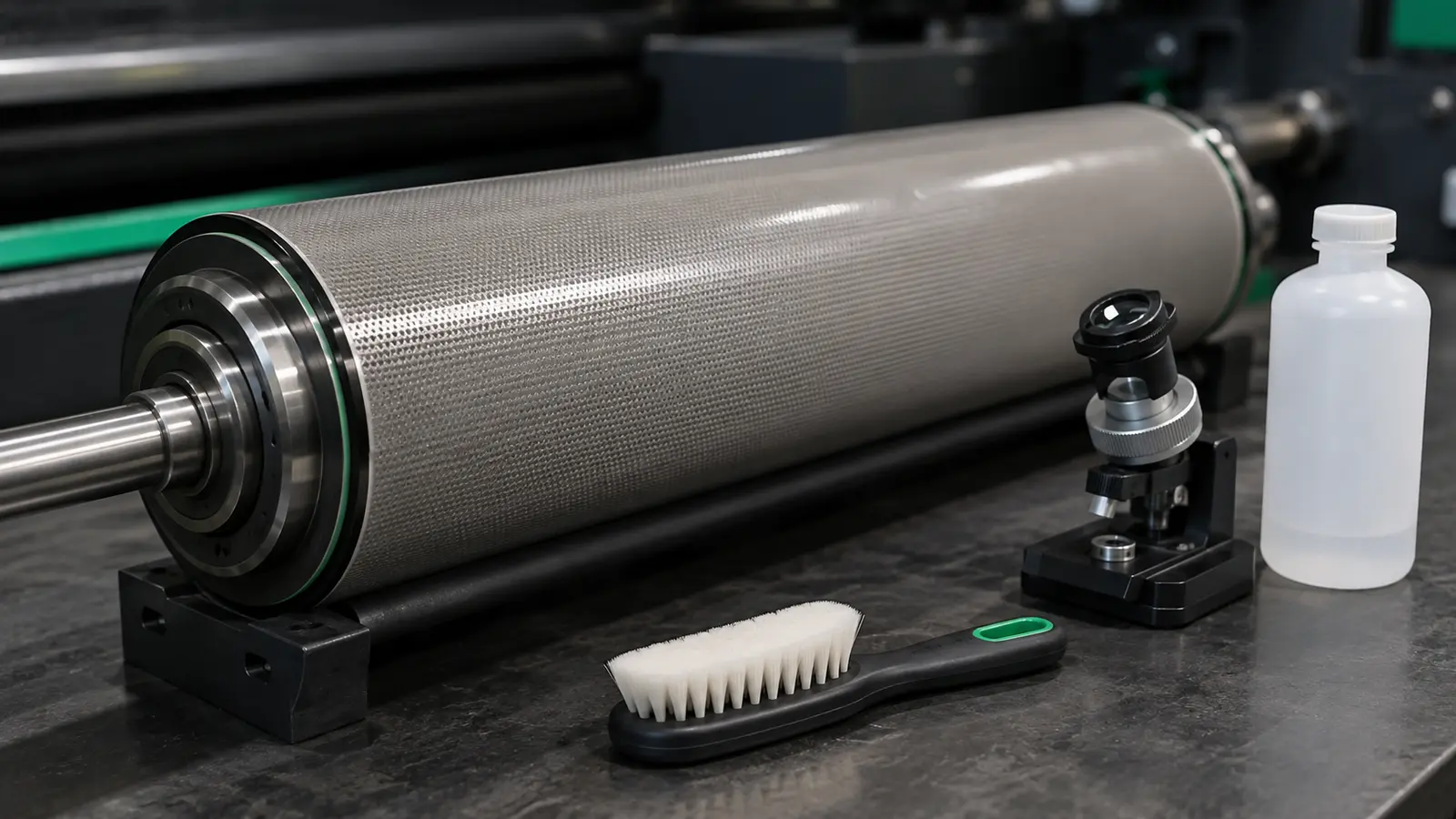
Compare cell volume, density and transfer uniformity before and after cleaning. Consistent microscopic images help distinguish remaining contamination from worn engraving and create evidence for the next maintenance decision.
Prepare a useful cleaner enquiry
Send the ink or coating type, line count, cell volume, roll material, photos, current method, cleaning equipment and destination country. This allows a supplier to assess whether chemical cleaner selection, a controlled trial or specialist service is the correct next step.
Chemical cleaning, soda blasting or another cleaning system?
These are different processes, not interchangeable product names. Ask the roll manufacturer or an approved service provider which methods are permitted for your roll and engraving. A search for soda blasting does not establish that the method is suitable, and this guide is not a blasting procedure. For chemical cleaner selection, identify the ink system, permitted chemistry and cleaning equipment first.
What to include in an anilox cleaner enquiry
Send the roll specification, ink or coating type, photos of the deposit, current cleaning product and equipment, and whether the roll is cleaned in place or off press. State the required pack size, expected consumption and destination country. Ask for the relevant product documentation and confirm suitability before requesting a trial.
A practical cleaning record
Use one record for the roll identifier, ink, condition before cleaning, product and procedure used, and condition after cleaning. Include before-and-after images taken consistently and any available cell-volume measurements. Record unresolved deposits or damage separately; a cleaner cannot be assumed to restore worn engraving.
Related solutions
Explore the relevant product area and select a solution for your process.
View solutions →