
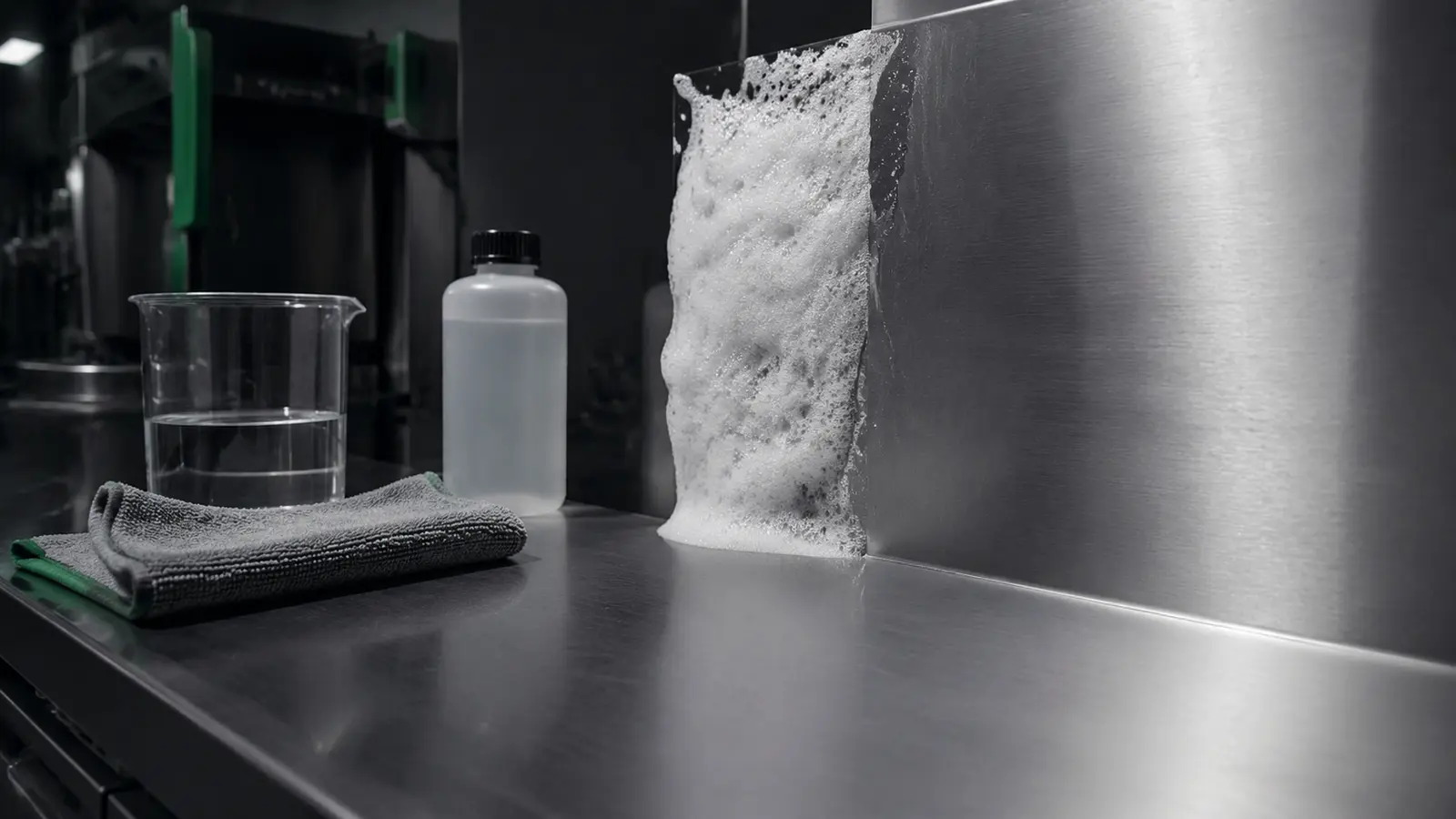
Start with the surface
Define where the product will be used: desks, counters, washable furniture, tiles, hard floors, doors, handles, commercial kitchens, stainless steel, glass or mirrors. A universal product may be useful, but it still has to be checked against the surface material.
Match the cleaner to the soil
Commercial cleaning usually involves dust, fingerprints, greasy marks, food-related grease, soap residue, minerals and streaks. For heavier grease or mineral deposits, a specialist product may be more suitable than a general cleaner.
Why dilution matters
Too weak a solution may not clean properly. Too strong a solution may leave residue, increase cost and create unnecessary risk for sensitive surfaces. Teams should use the same dosing method each time.
When ready-to-use is better
Ready-to-use products are often better when staff turnover is high, speed matters, cleaning is repeated many times per day or the risk of incorrect dilution should be reduced.
Practical conclusion
A concentrated cleaner should not be selected only by price per litre. The more important metric is cost per effective cleaning operation and whether the product fits the surface, soil and workflow.
Related solutions
Explore the relevant product area and select a solution for your process.
View solutions →